
WooCommerce QuickBooks Connector DocumentationWooCommerce QuickBooks Connector Documentation
  • QuickBooks Connector

    • Introduction
    • Overview
    • Features
    • Installation
    • Get Intuit Credentials
    • Setup Wizard
    • Connection Settings
    • General Settings
    • Auto Sync Settings
    • Export Order Settings
    • Customers
    • Products
    • Orders
    • Payment Methods
    • Taxes
    • FAQ & Notes
Buy Now
  • QuickBooks Connector

    • Introduction
    • Overview
    • Features
    • Installation
    • Get Intuit Credentials
    • Setup Wizard
    • Connection Settings
    • General Settings
    • Auto Sync Settings
    • Export Order Settings
    • Customers
    • Products
    • Orders
    • Payment Methods
    • Taxes
    • FAQ & Notes
Buy Now
  • QuickBooks Connector

    • WooCommerce QuickBooks Connector
    • Overview
    • Features
    • Installation
    • Get Intuit Credentials
    • Setup Wizard
    • Connection Settings
    • General Settings
    • Auto Sync Settings
    • Export Order Settings
    • Customers
    • Products
    • Orders
    • Payment Methods
    • Taxes
    • FAQ & Notes

Taxes

Tax mapping ties each WooCommerce tax class to the matching tax in QuickBooks, so exported orders show the same tax your customers actually paid.

Open Webkul WC Addons → WC Quick Book Connector → Taxes.
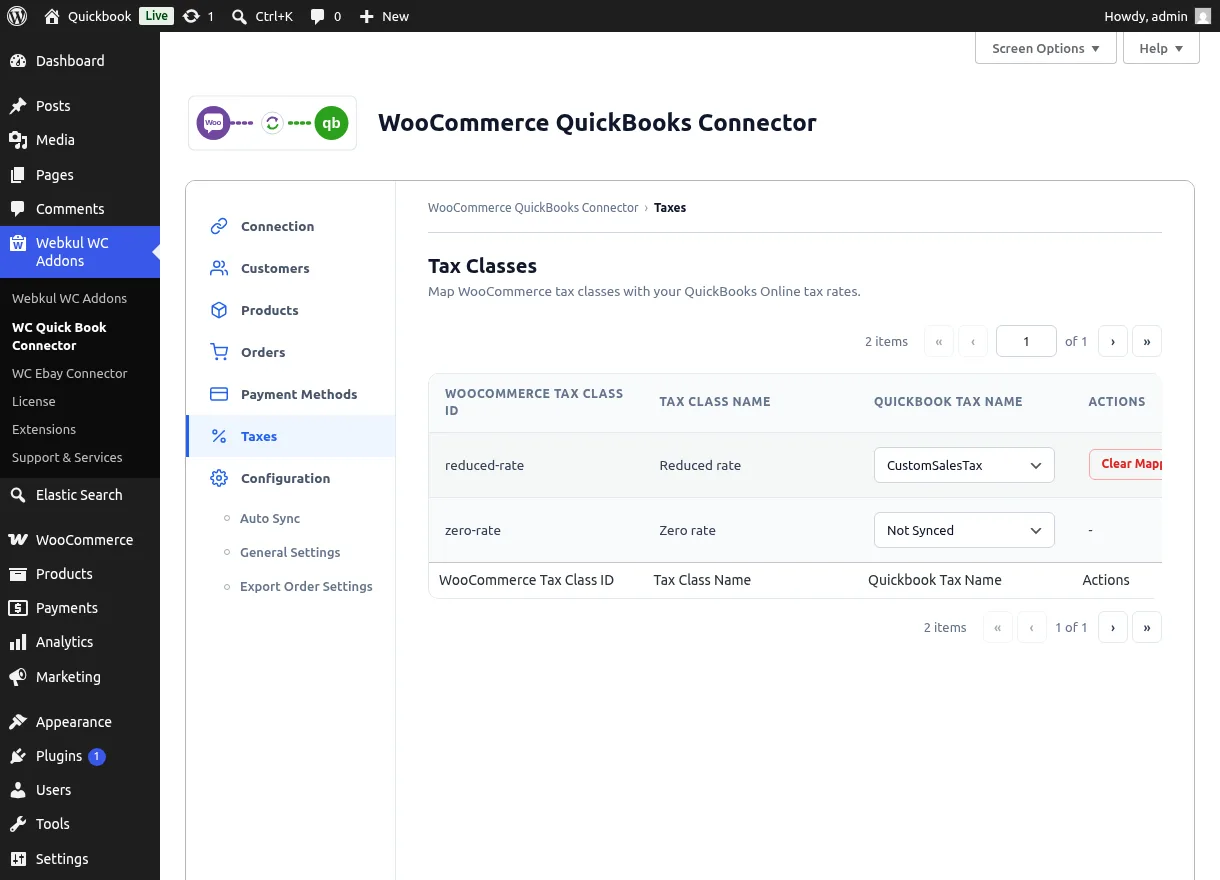
Taxes list mapping WooCommerce tax classes to QuickBooks taxes


Reading the List

ColumnMeaning
WooCommerce Tax Class IDThe tax class slug
Tax Class NameThe tax class as configured in WooCommerce → Settings → Tax
Quickbook Tax NameThe mapped QuickBooks tax, or Not Synced
ActionsClear Mapping for mapped rows

Mapping a Tax Class

  1. Open the Quickbook Tax Name dropdown on the tax class row.
  2. Search and select the matching QuickBooks tax — the list loads live from your connected company.
  3. The mapping saves immediately.

To undo a mapping, use Clear Mapping — a confirmation is shown, and the WooCommerce tax class itself is never modified ("Tax class mapping cleared successfully." confirms the change).

Fallback tax code

Records without a specific mapping fall back to the Default Tax Code chosen in General Settings. Map every tax class you actively use so nothing relies on the fallback unintentionally.


Related Features

  • General Settings — the default tax code
  • Export Order Settings — how taxed orders are recorded in QuickBooks
Prev
Payment Methods
Next
FAQ & Notes
ShareExport